Zander Fishing in Autumn and Winter: When and Where They Bite
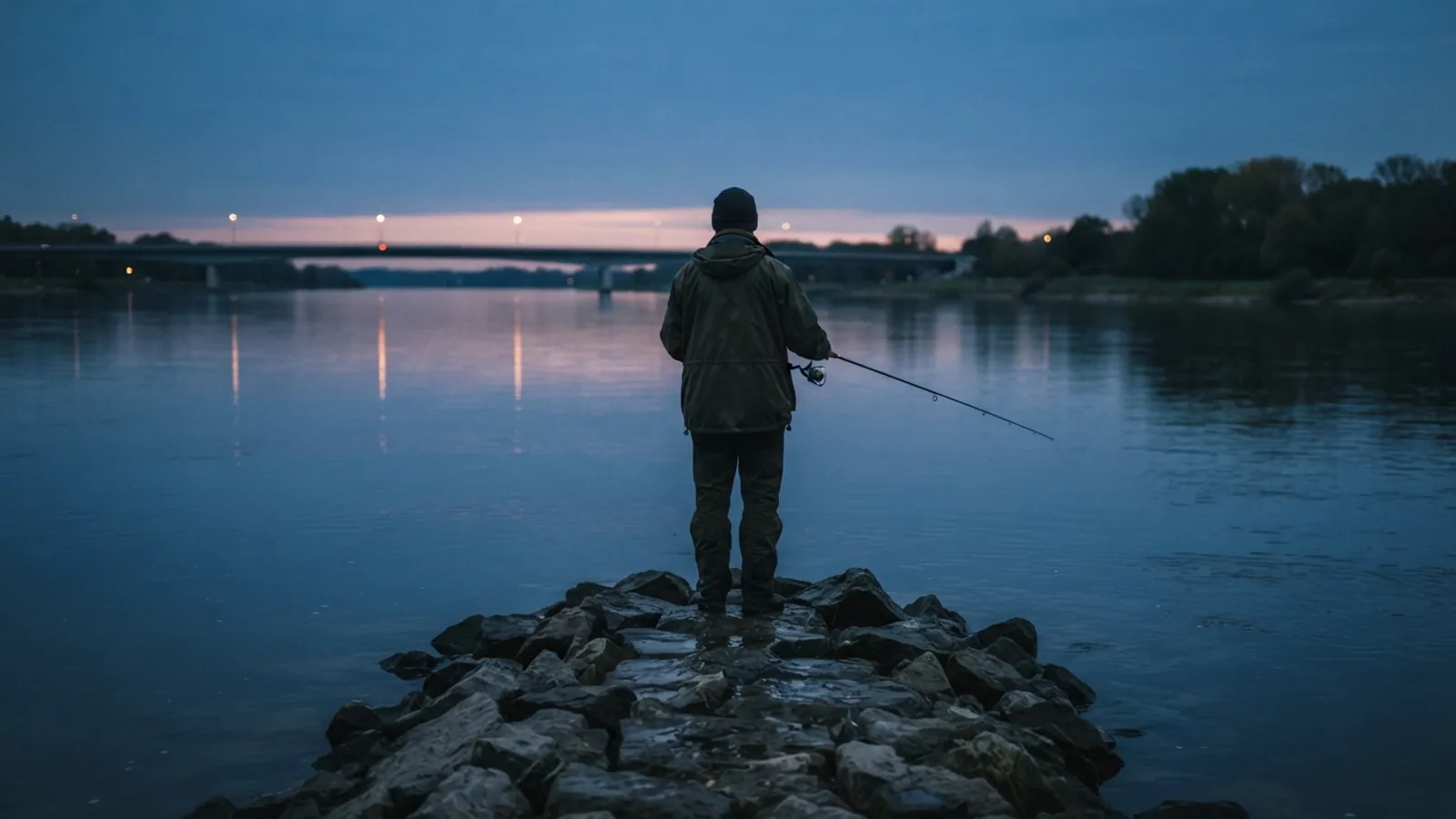
Zander have a reputation as the fish of dark autumn evenings, and for once the reputation holds up. Their eyes are built for dim light, and most tracking studies find them most active around dusk. What changes through autumn is the clock. The dusk window moves by hours between September and December, and cold water makes zander slower and pulls them deeper. In autumn, start before sunset and fish the first two or three hours of darkness.
Why do zander bite best in low light?
Zander see in the dark better than most fish we angle for. One study compared the eyes of zander, pike, perch and roach from two lakes. Zander came out as the most light-sensitive, at least twice as sensitive as a pike of the same size. A large pupil and a reflecting layer behind the retina do the work (Jokela-Määttä and colleagues, 2019). That layer is why zander eyes shine in torchlight. An older review came to the same conclusion. Zander and their relatives are most active at twilight and at night, when their eyes give them the edge (Ali and colleagues, 1977).
What is the best time to fish for zander in autumn?
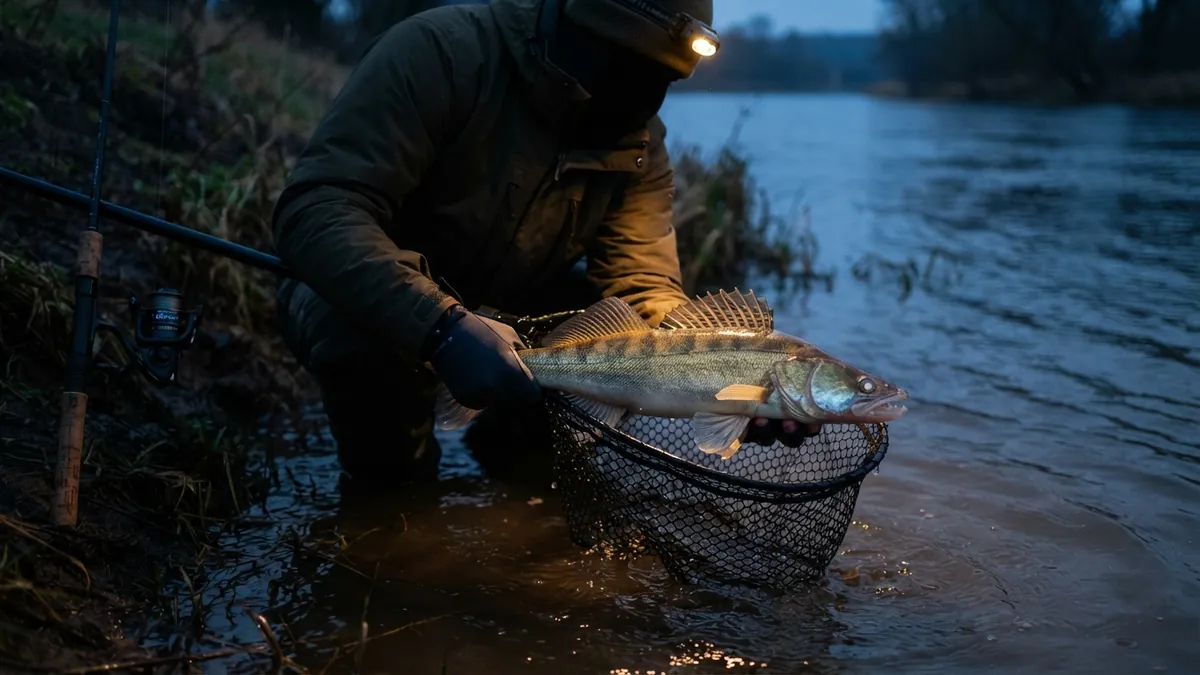
The evidence points to dusk and the first hours of darkness. In the River Elbe, tagged zander spent the day in the deep main channel. They moved up into shallower water at twilight, which is also when they moved most. At night they sat in the shallows (Horký and colleagues, 2008). In a turbid Danish reservoir, zander were most active between 6 pm and midnight (Jepsen and colleagues, 1999). Walleye, the North American cousin, follow the same pattern. Net catches peaked shortly after dusk (Kelso, 1978). In 13 years of walleye trips on a Wisconsin lake, evening trips were the most successful, morning trips came next and daytime trips last (Shaw and colleagues, 2021).
Deep night is less clear. In the Elbe, zander moved least in the middle of the night. In a Czech reservoir, though, they made long night trips in summer (Říha and colleagues, 2026). On the River Severn, tagged zander moved about as much by day as by night (Nolan and colleagues, 2024). The safe bet in autumn is to start before sunset and fish into the first two or three hours of darkness. Dawn gives a smaller second chance.
When does dusk fall in autumn?
That evening window moves fast in autumn. The chart shows sunset and full dark in London from September to December.
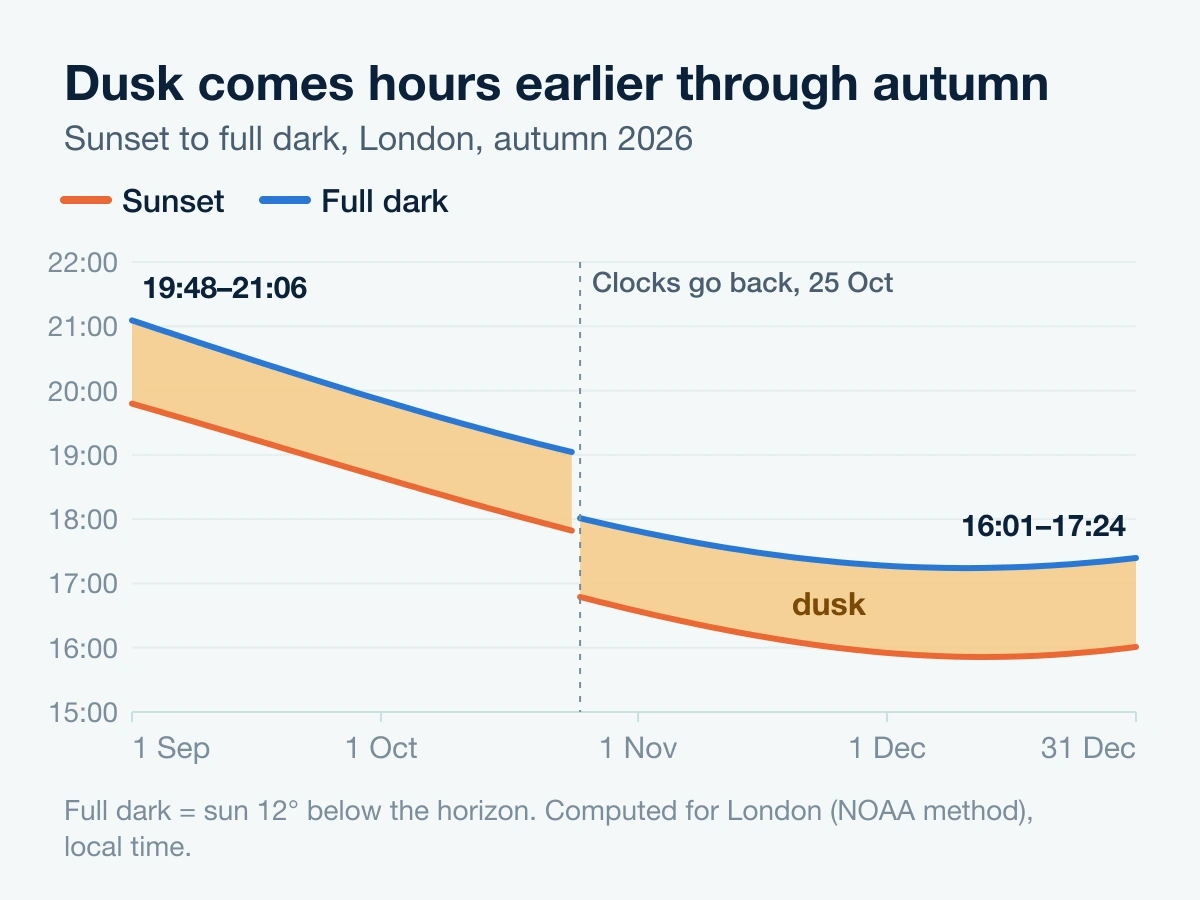
On 1 September, dusk in London runs from about 19:48 to 21:06. After the clocks go back on 25 October, the sun sets before 16:50, and in December it is fully dark by about 17:20. By then the best zander hour starts while many people are still at work. A late-autumn trip means leaving work early or fishing at the weekend.
How cold is too cold for zander?
Cold slows zander down, but it doesn't switch them off. In the Danish reservoir, every tagged zander stayed active through the winter (Jepsen and colleagues, 1999). On the Severn, zander moved more as the water warmed towards 15 °C (59 °F) and less when it got warmer still. So once autumn water drops below about 15 °C, they roam less (Nolan and colleagues, 2024). We found no study that measured an autumn feeding frenzy in zander. In two studies they simply moved most in autumn or in water around 15 °C (Vehanen and Lahti, 2003; Nolan and colleagues, 2024). Their bodies like it much warmer: lab work puts the optimum for zander near 27 °C (81 °F) (Hokanson, 1977). In autumn and winter, expect less wandering and probably shorter feeding spells. We found no study on how much zander eat below about 5 °C (41 °F).
Where do zander hold when the water gets cold?
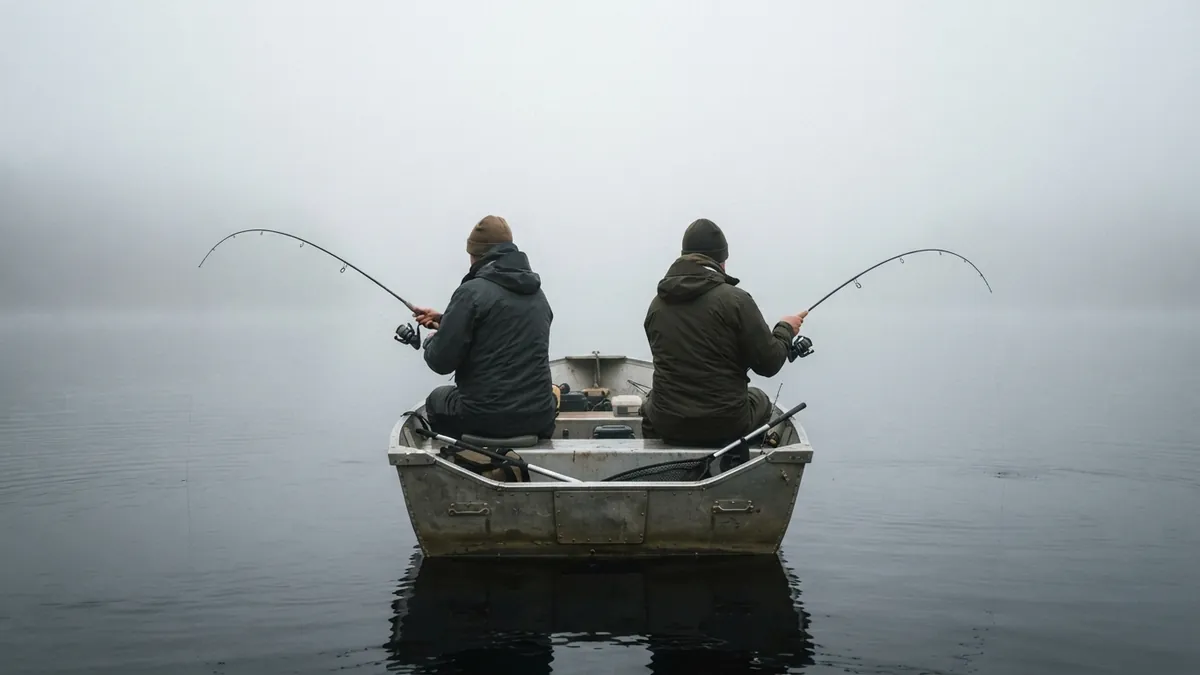
Deeper and in slower water. In a Czech reservoir, zander moved closer to the dam and into deeper areas in the cold months (Říha and colleagues, 2022). In a regulated reservoir, they chose deep, slow water, especially in winter, and their range shrank to a small area (Vehanen and Lahti, 2003). On the Severn, 89 percent of zander records in a marina came between December and April (Nolan and colleagues, 2024). The daily move stays the same: deep by day, shallower at dusk (Horký and colleagues, 2008).
- Deep holes and channel edges next to shallow flats. Zander rest deep and move up to hunt at dusk.
- In rivers, slack water: marinas, harbours, the gaps between groynes and the inside of bends.
- In reservoirs, the deeper basin towards the dam.
- At dusk, the edge where the drop-off meets the shallows.
Does murky water help?
Zander cope well with turbid water, and they see well in dim light. The Danish reservoir where they stayed active all winter was a turbid one (Jepsen and colleagues, 1999). Adult walleye were active in turbid zones but rested on the bottom in clear water (Ryder, 1977). Walleye also do best in lakes where you can see about 2 m down (Lester and colleagues, 2004). In clear water, fish the dim hours. In coloured water, a daytime bite is more likely.
Do rain, wind, pressure or the moon matter?
Light is the part with evidence behind it. Cloud and a ruffled surface both dim the water, so a grey, breezy day can start the evening bite a little earlier. Rain that colours a river may help in the same way. We found no reliable effect of air pressure. In the long Wisconsin walleye record, the angler, the bait and how many fish had already been caught mattered more than the weather (Shaw and colleagues, 2021). That record also showed very small links with the moon. For zander, klewa leaves the moon out of the bite index.
Is winter zander fishing worth it?
Yes. Zander stay active all winter, they just move less. Look for them in deep, slow water, on big rivers often in harbours and marinas, and expect short windows. Dusk stays the best bet. In December it runs from about 16:00 to 17:20 in London. On a bright, frosty day the dim hours matter even more.
Which rules should you check?
Rules for zander vary a lot. In England the close season runs from 15 March to 15 June on rivers, streams and drains, and most stillwaters have none. Zander are not native to Britain, and the Canal & River Trust says zander caught on its waterways must not be returned alive. Other fisheries set their own terms, so check yours before you go. Elsewhere in Europe, closed seasons and size limits are set by country or region.
klewa does the timing work. Pick your spot and zander, and the forecast rates the next 24 hours from light, water temperature and weather. You'll see when the evening window opens at your water.
See tonight's best hours for zander at your spot.
Open the forecast