Fishing Calendar 2027 Without the Moon: When Fish Really Bite
A fishing calendar for 2027 promises something tempting: the best fishing hours for every day of the year, printed in advance. Most are solunar tables, built on the moon and the sun. In Germany, the country's best-known table, the Beißzeiten in FISCH & FANG magazine, ended with 2025. Its page now says no more tables will be published. So what do you plan 2027 with? The short answer: honest bite times can't be printed a year ahead. The bite follows the weather and the water, and no one knows those that far out. This article shows what solunar tables contain and what catch studies found about the moon. Then it explains what really moves the bite and how klewa works out bite times for your spot without a moon table.
What's actually in a solunar table?
The idea goes back to John Alden Knight, an American angling writer. In the 1930s he put forward the solunar theory. It says fish and game feed hardest at times set by the moon and the sun. Modern tables mark two major periods a day, when the moon is overhead or underfoot. Two minor ones fall around moonrise and moonset. Days near the full and new moon get the best ratings.
Most solunar tables in magazines and apps work the same way. They start from where the moon and the sun are on your date. The moon's path is known years ahead, so a table like this can be printed long in advance. That is also its weak spot. It has no idea whether a cold front will roll over your lake on Saturday morning.
Do fish really bite by the moon?
Researchers have compared moon phases and solunar periods with real catches. The results are mixed. The effects they found are small or come from a single lake.
- Pike in a small lake in Germany, one summer (Kuparinen and colleagues, 2010): around full and new moon anglers caught roughly 25 percent more fish per hour than average. Around the quarter moons they caught fewer. Dusk, cooler water and a strong wind also meant more fish. Heavy fishing on the two days before meant fewer. Nobody has repeated the study yet.
- Muskellunge in North America, about 228,000 daytime catch records (Vinson and Angradi, 2014): up to roughly 5 percent more fish reported on the peak days around full and new moon. The records don't say how long anyone fished, and in three angler surveys that did count the hours, catch per hour didn't follow the moon.
- Walleye in Wisconsin, 13 years of records (Shaw and colleagues, 2021): with the moon underfoot during the trip, anglers were a little more likely to land at least one fish. Catch per hour didn't rise, and with the moon overhead it was slightly lower. The full moon made no difference. The guide, the bait and how many fish had already been caught mattered far more.
- Trout in the United States (Quigley and colleagues, 2023): popular solunar tables did not predict catch rates. Air temperature did better.
So the moon isn't pure superstition, but it's a small factor. Only for pike did a study count catch per hour and find a phase effect, and that was one lake in one summer. For trout the tables failed outright. Water temperature and light matter much more, and they change from day to day. That's why klewa counts the moon phase for pike only and lets it move the index by 3 percent at most. Moon position, the heart of every solunar table, doesn't count for any fish. Moonrise, moonset and the phase still sit next to the forecast for anyone who likes to plan with them.
What really decides when fish bite?
For every hour klewa asks two questions. First: can your fish feed at all? That comes down mostly to water temperature. Every species has its comfort range. For pike it is about 7 to 19 °C (45 to 66 °F), for perch 12 to 23 °C (54 to 73 °F). Crappie like 15 to 25 °C (59 to 77 °F), largemouth bass about 18 to 29 °C (64 to 84 °F). Below that range a fish feeds less, however good everything else looks, and in water much warmer than that the index drops fast. In warm, still water the model also checks oxygen, and it watches whether the water is warming or cooling. Second: how good is this particular hour? Six things decide that:
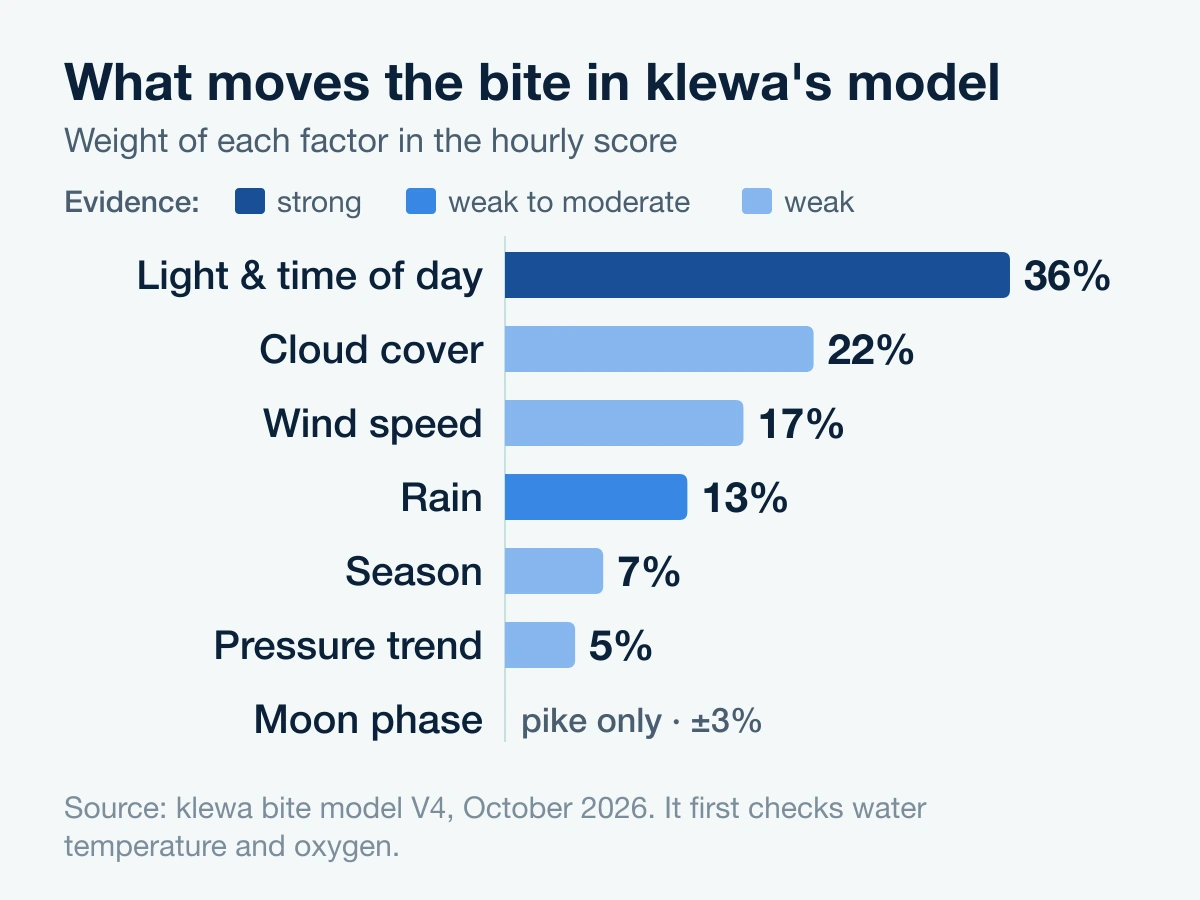
- Light and time of day, about a third of the score. Dawn and dusk usually count most, worked out from the real sunrise and sunset at your spot. How much depends on the fish and the water temperature: in cold water dawn and dusk stand out less.
- Cloud cover, about a fifth. For most fish the sky makes no difference in the model. Only zander lose a little under a clear sky, and bluegill under heavy overcast.
- Wind speed, 17 percent. The score barely changes: it's a little lower in flat calm and in a gale. Wind direction doesn't count at all.
- Rain, 13 percent. Light rain counts as a small plus, a downpour pulls the hour down.
- Season, 7 percent. Neutral most of the year, because the water temperature already reflects the season. It dips only while your fish spawns, which klewa reads from the modelled water temperature. Pike are the exception: they barely feed while spawning, so the model cuts their whole index by 60 percent.
- The pressure trend, 5 percent. Rising pressure after a front costs a little, falling pressure counts the same as steady. The number on the barometer itself doesn't count. When the weather shows a real cold front, daylight hours lose up to 10 percent for two days.
Three things are left out on purpose: moon position, the absolute air pressure and wind direction. None of them has held up in catch data. The moon phase counts only for pike, and only a little: up to 3 percent more around full and new moon, up to 3 percent less around the quarter moons. Absolute pressure shows up in one spot only. It changes how much oxygen the water can hold, and the model uses it for exactly that.
How does klewa work out bite times for your spot?
- You pick a place on the map and a fish, say pike.
- klewa pulls the hourly weather for that spot. A physical model estimates the water temperature from air temperature, sun and wind.
- Sunrise and sunset are calculated for that exact place and date. The hour either side of each counts as dawn or dusk.
- For every hour it checks whether your fish can feed and how good the hour is, then multiplies the two. The result is a bite index from 0 to 100.
- The strongest run of hours is marked as a golden window. You see at a glance when to be on the water.
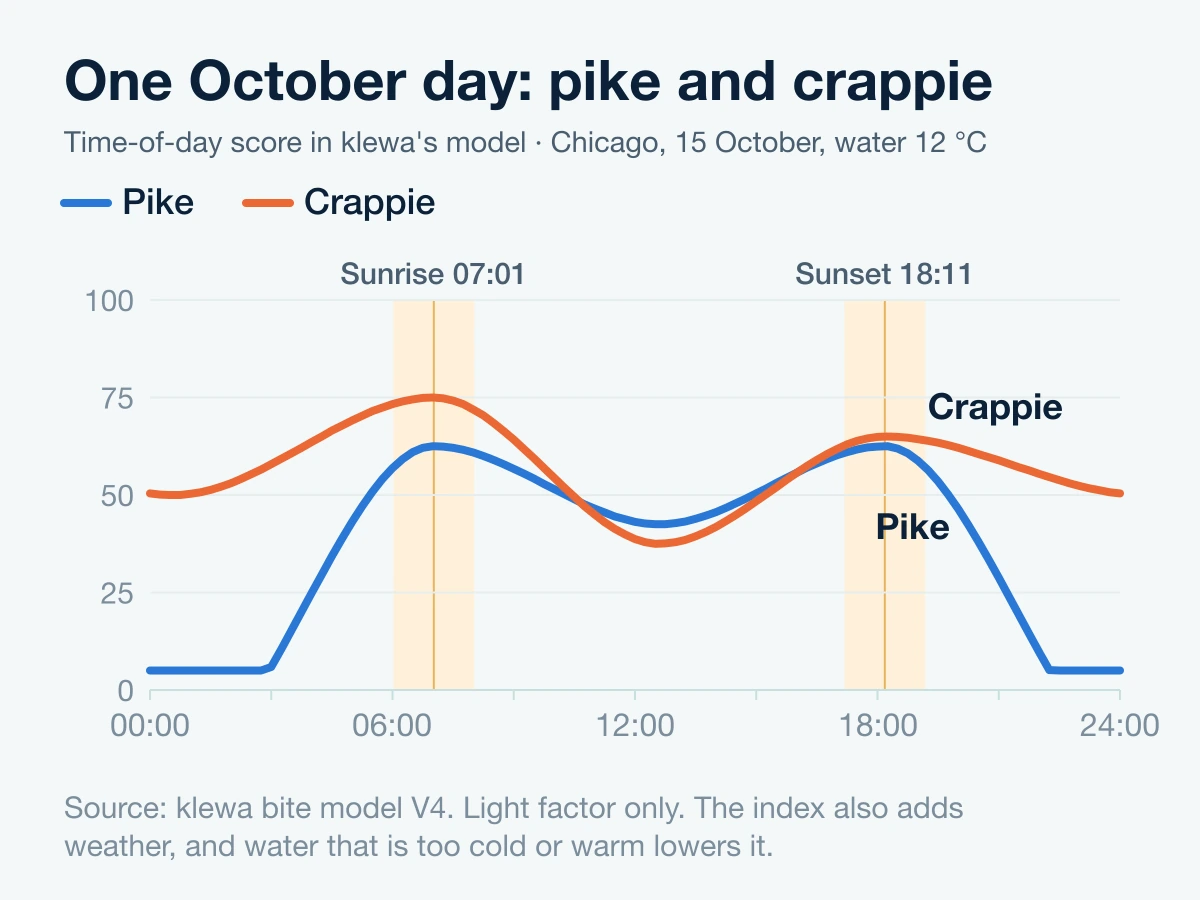
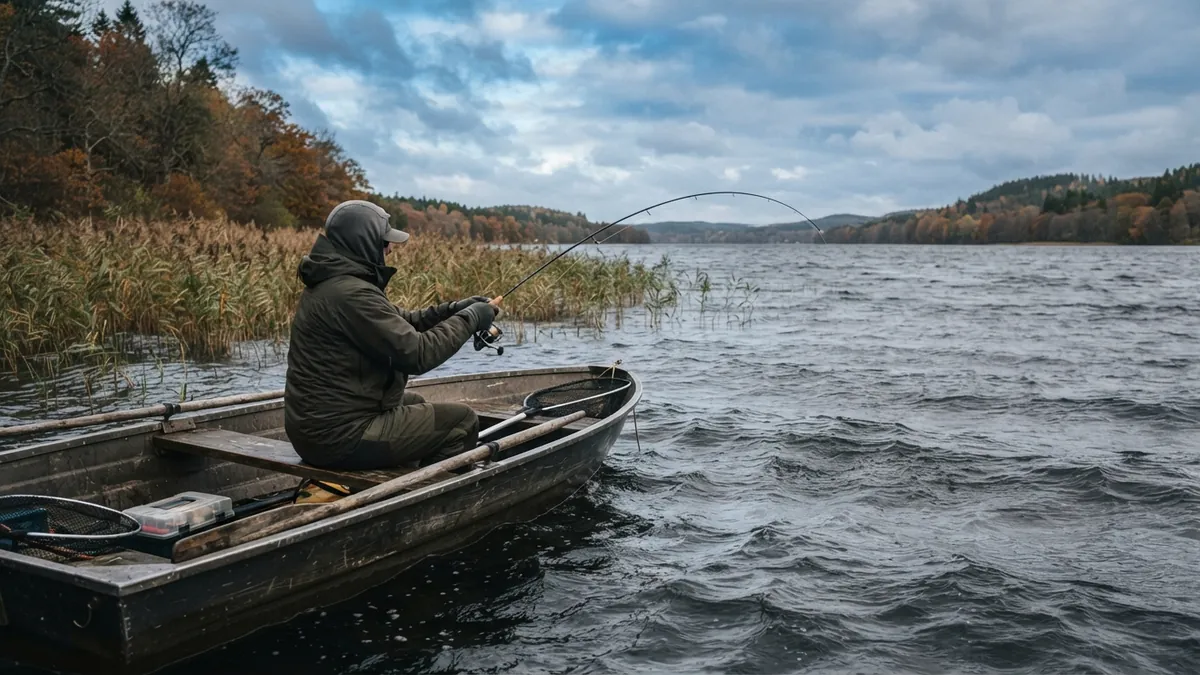
Picture a grey October morning with a light breeze and water around 12 °C (54 °F). For pike the index usually climbs around sunrise, sags through the middle of the day and picks up again towards sunset. Crappie run on a different clock. Their time-of-day score peaks around sunrise and stays fairly high through the evening and the night. But 12 °C is below their comfort range, so the model trims every crappie hour by about a quarter, and their index ends up below the pike's all day. The chart shows the light part only. A moon table would hand both fish the same hours.
How do you plan 2027 without a moon calendar?
The season sets the frame, and it does so through water temperature. The calendar itself plays no part. The model only lowers the score while your fish spawns: a little for most species, by more than half for pike, which barely feed then. Here is what klewa's temperature ranges suggest for four common species, with months for a typical shallow lake in a temperate climate like central Europe's. Treat the months as a rough guide, since a warm spring, a long autumn or a southern lake can shift everything by weeks.
Largemouth bass
- •Strongest in the model while the water stays above about 18 °C (64 °F): on a temperate lake roughly May to September. Slow from November to March.
- •Comfort range: about 18 to 29 °C (64 to 84 °F). Hotter water cuts the index fast.
- •Best hours: dawn and dusk.
Pike
- •Strongest in April and May and again from September to November. During the spawn in early spring the index drops by more than half, and winter is slow.
- •Comfort range: about 7 to 19 °C (45 to 66 °F). In a hot summer the index sags.
- •Best hours: around sunrise and sunset. The moon phase moves the index up or down by 3 percent at most.
Crappie
- •Strongest from May to September on a temperate lake, with April close behind. Slow in winter.
- •Comfort range: 15 to 25 °C (59 to 77 °F).
- •Best hours: dawn first, then dusk. Nights stay fairly good.
Carp
- •Strongest from May to September. From December to February the model expects next to nothing.
- •Comfort range: about 17 to 28 °C (63 to 82 °F).
- •Best hours in summer: dawn and warm nights.
Seasons, closed periods and size limits differ by state, country and water. Check your local regulations before you plan a trip, especially in spring.
Why can nobody print honest bite times for all of 2027?
Because the parts that matter most aren't known that far ahead. The moon is: its path is fixed for years. A weather forecast, though, is good for a few days, and water temperature follows the weather. A table for all of 2027 can only show what is certain. And that happens to be the factor with the smallest effect.
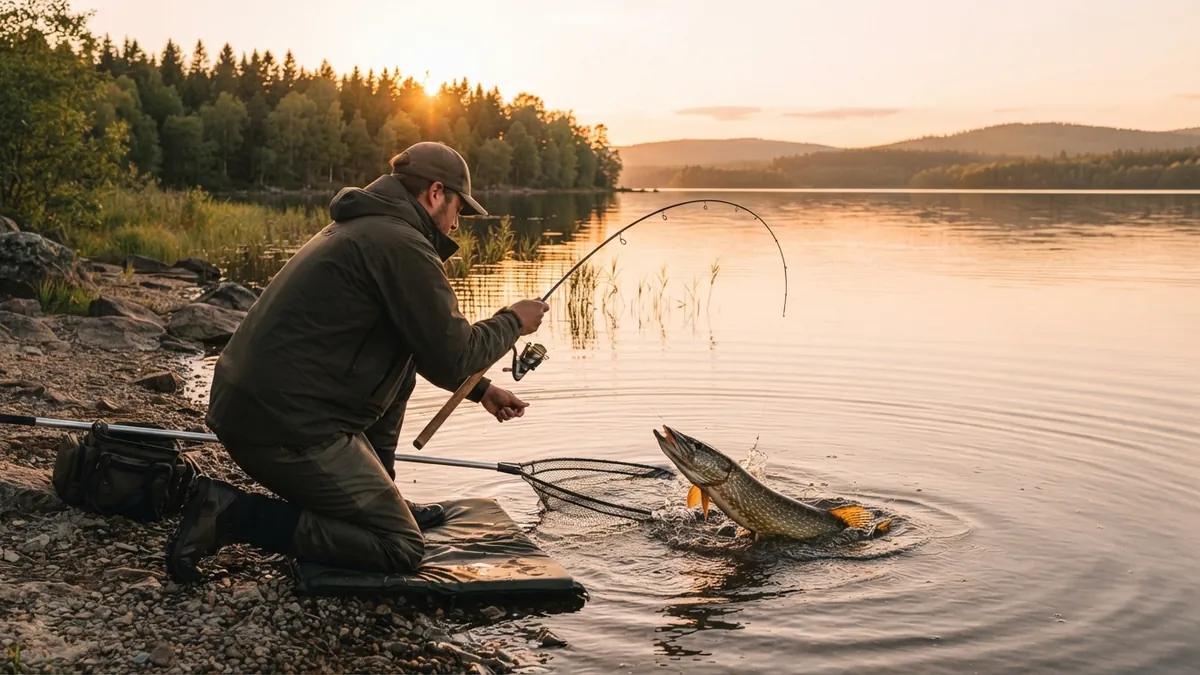
A simple habit works better. Check the forecast for your spot the evening before or first thing in the morning. Find the golden window and plan the trip around it. If a solunar period happens to fall inside it, good. Just don't stay home on a promising grey morning because a table puts the peak at noon.
See today's bite times for your spot, hour by hour, for pike, bass and ten more species.
Open the forecast