Air Pressure and Fishing: What Really Matters
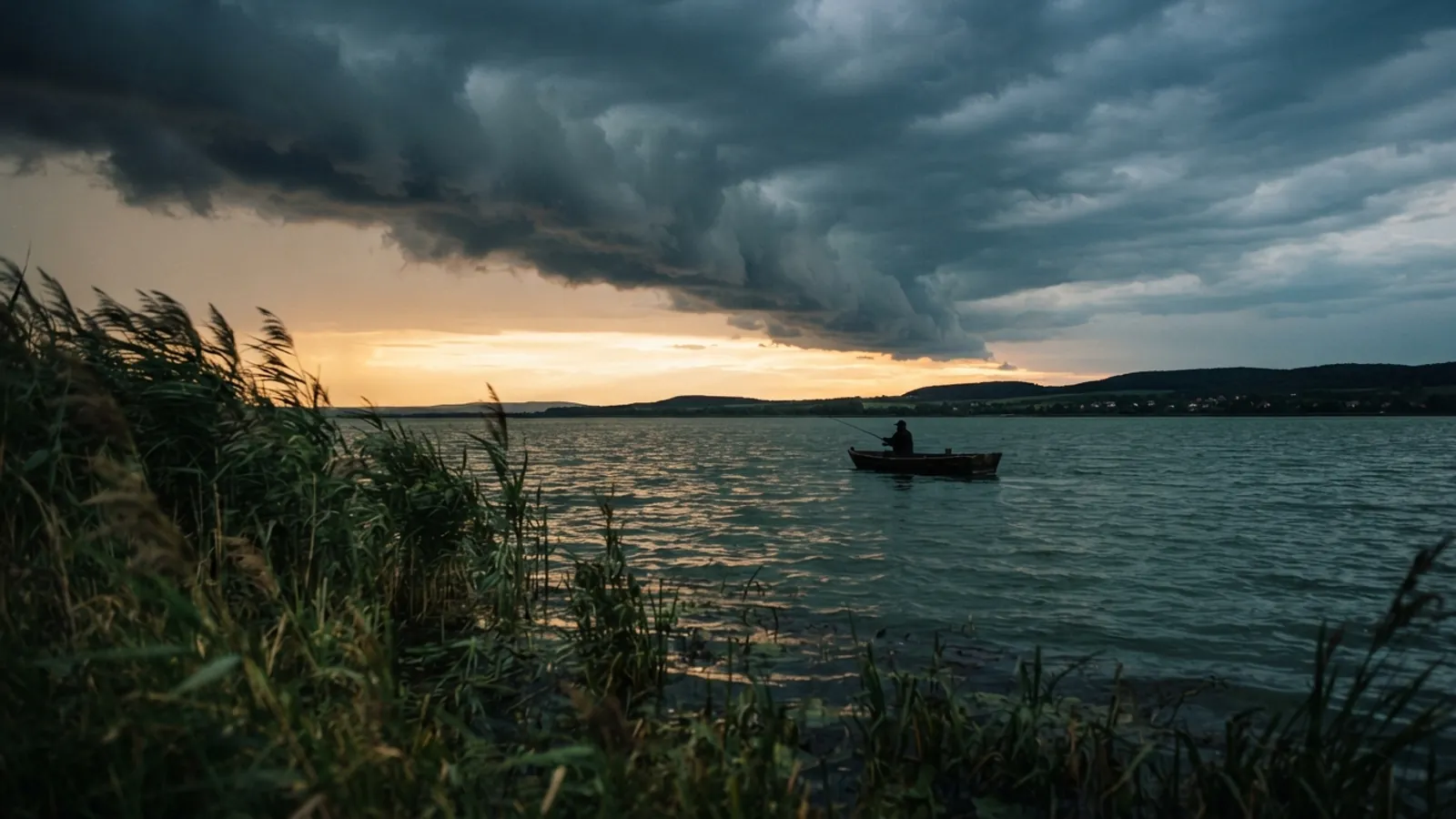
Pressure gets blamed for slow days more than any other weather. For the bite, Klewa uses it only as a trend, and the trend counts for less than light or water temperature. Here's why, and what it means for pike, bass and trout.
Location: Worldwide | Target: Freshwater anglers | Core signal: Pressure trend as a sign of a passing front | Result: Realistic expectations on days when the weather turns
The Problem With Old-School Pressure Rules
Most fishing tips boil down to static rules: "high pressure is bad," "low pressure is good." Fish don't read a barometer. A change of 10 hPa equals about 10 cm of water depth, and a fish changes depth by more than that all the time. In a controlled test on yellow perch, neither rising nor falling pressure changed how much they ate. In a pike catch study on a German lake and in 13 years of walleye catch records from Wisconsin, pressure didn't make the list of factors that mattered.
How Klewa Uses Pressure
The barometer reading gets no score of its own. Klewa uses it for one physical thing: how much oxygen the water can hold, which is why mountain lakes hold less. For the bite it looks at how pressure changes over hours and days. A front brings new light, wind and water temperature. When pressure climbs after it, the trend shows the front has passed. That's all the trend is used for.
- Steady or falling pressure: the trend scores best either way
- Rising pressure: a small minus
- After a cold front (the air cools and pressure climbs), Klewa lowers the score of daylight hours by up to 10 percent, fading over two days
The trend makes up just 5 percent of the weather score. Light and time of day make up 36 percent, cloud 22, though for most fish the cloud score barely moves. And before any of that, water temperature decides whether the fish can feed at all.
Why Trends Beat Fixed Rules
- Follows how pressure changes over hours and days
- Isn't fooled by altitude: 964 hPa can be a storm or a lake 450 m up
- Catches a front while it passes
- Stays a side signal next to water temperature and light
Species-Specific Fishing Tips
Pike Fishing Tips
- •Ambush hunter that likes reduced visibility
- •In a German lake study, pike bit better on windy days and at dusk
- •Pressure wasn't among the factors that mattered there, so don't cancel a trip over the barometer
Bass Fishing Tips
- •Highly adaptable and hard to knock off the feed
- •Water temperature and light decide more than pressure
- •The pressure trend is only a small part of the forecast
Trout Fishing Tips
- •Cold-water species, sensitive to oxygen levels
- •Water temperature decides far more than pressure
- •In warm summer water trout feed poorly, whatever the barometer says