Why Aren't the Fish Biting? Four Quick Checks
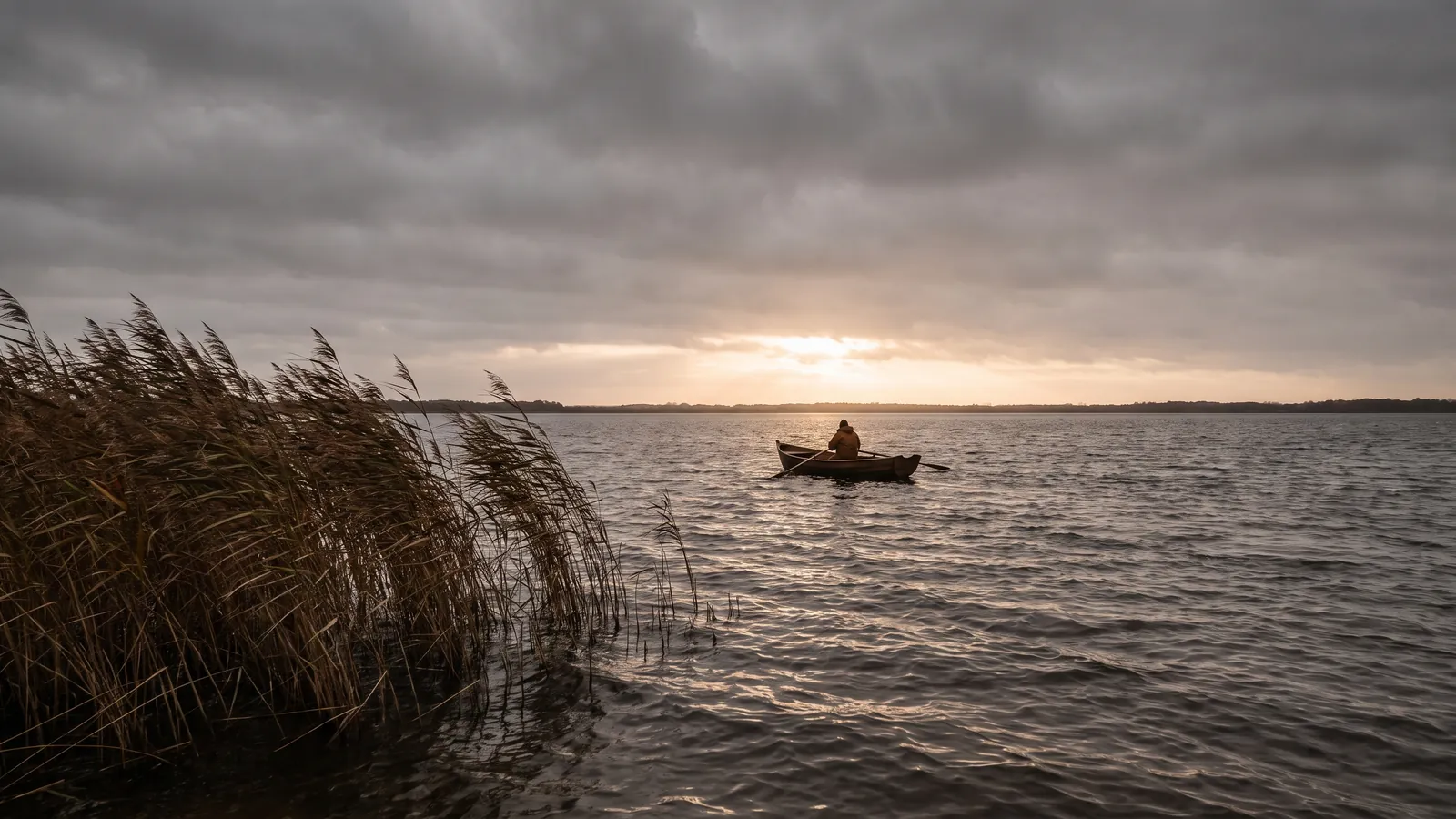
A blank day almost always comes down to one of two things, and each needs the opposite fix. Maybe the fish simply couldn't feed that day. The water was outside their comfort range or low on oxygen, and no lure change would have saved you. Or the fish were ready and you missed the window. Mostly it's the light that decides which two or three hours of a day are worth fishing. So work through it in order. Start with water temperature. Next, look at the last 48 hours of pressure. The hours you actually fished come last.
Two kinds of blank day
klewa's bite index is built on that split. Part one is capacity, a number from 0 to 1 that asks whether this fish can feed at all right now. It checks whether the water sits inside the species' own temperature range and whether there's enough oxygen. It also watches whether the water is warming or cooling. Part two is opportunity, scored from 0 to 100. How good is this particular hour? The index multiplies the two, and that's deliberate. A perfect dawn times a capacity near zero still comes out near zero.
Opportunity is a weighted sum of six things. Time of day and light count most, about a third (0.36). Cloud follows at 0.22, then wind speed (0.17), rain or snow (0.13), season (0.07) and pressure trend (0.05). Those weights are the same for every fish. The differences hide inside each score. Every species gets its own temperature band and oxygen limit, and its own best hours of the day, which shift as the water warms and cools.
Step 1: Could the fish feed at all that day?
Fish are cold-blooded, so their appetite tracks the water temperature. Air temperature barely matters. Each species has a band where it feeds normally. Below it appetite fades slowly, above it quickly. Here are the numbers klewa uses. First comes the band. The second number is where heat stress sets in and the fish's ability to feed is down to half. By the third it has all but stopped.
- Pike: 7–19 °C (45–66 °F), half at 23 °C (73 °F), almost nothing at 28 °C (82 °F)
- Trout: 8–15 °C (46–59 °F), half already at 19 °C (66 °F), almost nothing at 22 °C (72 °F)
- Perch: 12–23 °C (54–73 °F), half at 27 °C (81 °F), almost nothing at 30 °C (86 °F)
- Zander: 12–24 °C (54–75 °F), half at 27 °C (81 °F), almost nothing at 30 °C (86 °F)
- Largemouth bass: 17.5–29 °C (64–84 °F), half at 33 °C (91 °F), almost nothing at 36.5 °C (98 °F)
- Carp: 17–28 °C (63–82 °F), half at 32 °C (90 °F), almost nothing at 36 °C (97 °F)
Take a hot August afternoon with the lake at 25 °C (77 °F). The carp is right in its band. The pike in the same water is down to about a third. Past the stress point the drop is steep, just as it is in feeding studies. Anglers see the same thing: trout catches collapse once a river climbs past about 19 °C (66 °F). klewa leaves a small remainder above the last number, because in a deep lake fish can sit in cooler water under the warm top layer. On the cold side the bands are more generous. Wild fish rarely eat as much as they could, and pike and trout are often caught best in cool water.
Oxygen is the second part of the gate. klewa doesn't measure it, it estimates it from the weather. Cool water sits close to full saturation. Warm, still water drops to about 85 percent, because everything living in it uses oxygen faster than the air tops it up, and wind stirs it back. High above sea level the air is thinner, so fish get less oxygen out of the same water. In feeding studies fish only start eating less below roughly 45 to 80 percent saturation, depending on the species, and they need a little more as the water warms. Trout and pike need the most, perch and crucian carp the least. On a lowland lake oxygen costs little in klewa: up to about a tenth on hot, calm days, mostly for pike and catfish. It bites harder on warm, calm water in the mountains. What the estimate can't see is real oxygen loss: the bottom of a lake in summer, a weedy pond before dawn, a long spell under ice. After a hot, windless week on a shallow pond, suspect the oxygen before you blame the lure.
The last piece of the gate is direction: is the water warming or cooling? For every hour klewa compares the water at 2 m with the same hour three days earlier. It counts a change of 1.5 °C (2.7 °F) or more. Whether that helps depends on where the water sits. Warming below a fish's band, or cooling above it, adds 5 percent. The opposite takes 5 percent off. Inside the band it changes nothing, in spring and autumn alike. We found no study that measured an autumn feeding peak. In walleye, intake fell as the water cooled, and in one study pike ate most in June. What autumn does is bring pike back into its band after the summer heat, and that alone lifts its score. For pike there's one more thing in spring: while they spawn they barely eat, so klewa multiplies their capacity by 0.4.
Step 2: What did the pressure do in the last 48 hours?
Watch the trend and ignore the number on the barometer. klewa gives pressure trend a weight of just 0.05. The absolute reading gets no score of its own. It only feeds the oxygen calculation. A reading of 964 hPa might mean a storm is coming. It might also just mean you're standing 450 m above sea level, and the fish can't tell those apart. A controlled study on yellow perch found no direct effect of pressure on feeding. In a pike catch study on a German lake and in 13 years of walleye catch records from Wisconsin, pressure didn't make the list of factors that mattered. The trend stays in, with a small weight, as a rough sign that a front is passing through.
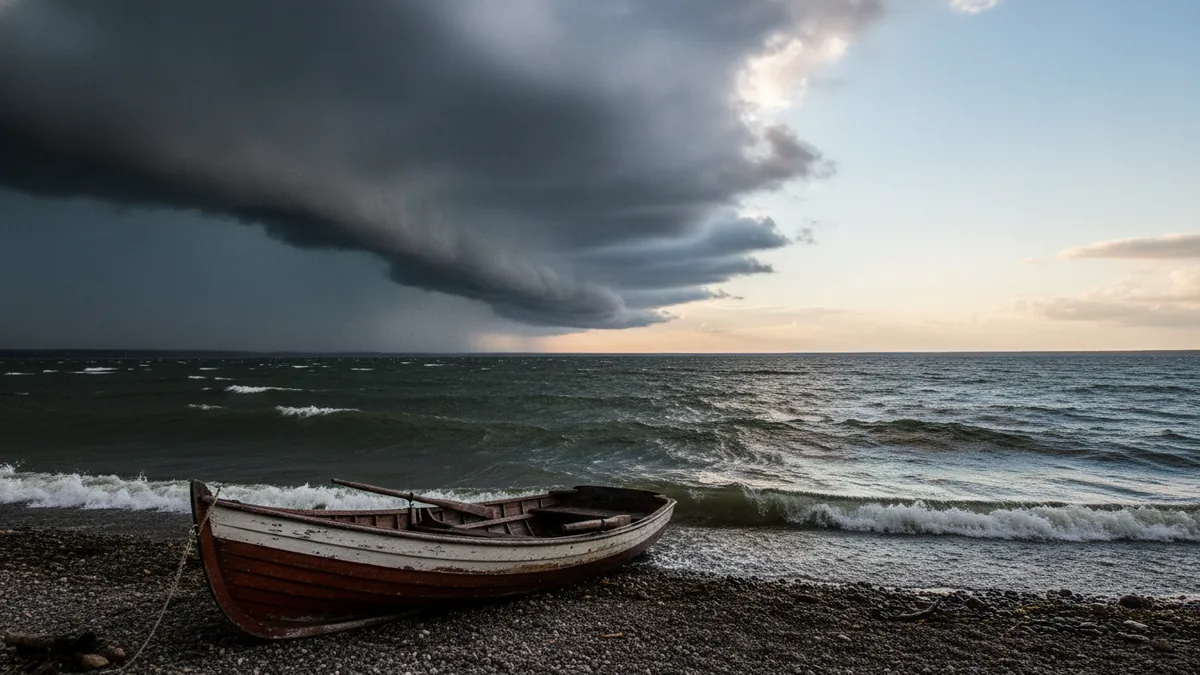
You can't get a trend without history. klewa pulls the last three months of hourly surface pressure, in the same request that feeds its water temperature model. It averages the latest six hours and compares that with six-hour windows centred 48 and 72 hours back. Anything under 3 hPa counts as stable. Surface pressure isn't corrected to sea level the way your weather app shows it, so the raw value swings with altitude and only the change means anything. Steady and falling pressure score the same, a rise costs a little, and every species gets the same rule. Then there's the post-front lull anglers talk about: the air cools, pressure climbs and the bite goes slow for a day or two. It's angler experience more than a measured effect, so klewa keeps it small. When pressure has risen by 3 hPa in a day and the air has cooled by 3 °C, klewa marks daylight hours down by up to 10 percent, fading to nothing over 48 hours. Sunshine isn't penalised on top, because for most species cloud cover is neutral.
Step 3: Did you fish the whole day, or the right hours?
Most blank days can be rescued right here. Light and time of day carry the biggest weight, 0.36, and nothing else moves the score as much within a day. Cloud and wind have weights of their own, but the studies behind them are thin and point in different directions, so klewa keeps both scores almost flat. So if the fish could feed and you still caught nothing, the likeliest story is simple. You put in eight ordinary hours and missed the two good ones.
klewa builds its light curve from the real sunrise and sunset at your spot. Clock hours don't come into it, so dawn and dusk move through the season the way they do outside. The shape of the day changes with the water, too. In warm water pike and zander have clear peaks at dawn and dusk. Under the ice a pike's day evens out, and by late autumn roach feed more at night. Cloud barely touches the curve, because there's enough daylight to hunt by under any sky. Only zander, which hunt best in dim light, lose a little under bright sun.
Step 4: Did the water itself change?
Wind makes up 0.17 of opportunity, and only its speed counts. Direction isn't in the model. The studies disagree about wind. Pike in one German lake were caught better on windy days, muskie slightly worse, and walleye catches didn't change at all. So klewa's wind score is almost flat: full marks from about 7 to 29 km/h, 85 in dead calm, and it only eases down to 80 in a gale. A gale is a safety question, not a fishing one. Glass-calm heat still matters, but through the oxygen estimate rather than the wind score.
Rain and snow count for 0.13, and they can go either way. Light rain is usually a small plus: it dims the surface and washes food in. A downpour is a minus, mostly because it muddies the water. Anglers call that colour, and scientists measure it in NTU. Largemouth bass feed almost normally up to about 37 NTU. By about 70 NTU they eat 35 to 40 percent less. They switch from hunting by sight to hunting by vibration. Heavy rain also dumps cold runoff into the shallows, which can push fish off a spot within an hour.
Things we won't blame
Three popular explanations get little or no room in klewa's index, on purpose. Each gives you a comfy excuse to stop looking. Blame the moon and you'll never check whether the water was six degrees over your fish's heat limit.
- Moon phase and solunar tables. A 2023 study found solunar tables failed to predict trout fishing success in fresh water, and walleye were caught no faster per hour with the moon overhead or underfoot. The phase does show up for pike: in one German lake anglers caught about a quarter more per hour around full and new moon. That's a single lake, so klewa counts it for pike only, and by 3 percent at most. For the other 11 species the moon doesn't move the index. klewa still shows the moon phase, moonrise and moonset next to the forecast, if you enjoy that sort of thing.
- A magic pressure number. Nobody has found consistent evidence for one, and altitude skews any fixed cutoff anyway. Pressure keeps a single, physical job in the model: setting how much oxygen water can hold. That's why water high above sea level holds less.
- Wind direction. The old rhymes about east winds really describe regional weather and say little about how fish behave. klewa models wind speed and leaves direction out.
A 60-second check after a blank day
- Where was the water temperature itself (forget the air) against your fish's band and heat limit?
- Warming or cooling? Work out whether that helps your species or hurts it.
- Warm, shallow, still water: assume it was short on oxygen.
- Pressure over 48 hours. Steady, falling, or climbing after a front?
- Did a cold front pass, with cooler air and climbing pressure? klewa marks the next two days of daylight down a little.
- Which hours did you fish, and how close were they to real sunrise and sunset?
- Was your fish spawning? Pike, for one, barely eat while they spawn.
- Wind: dead calm, a working chop, or too strong to fish properly?
- Anything that changed the water itself, like runoff or a downpour that muddied it.
The first three questions tell you whether the day could be won at all. If they look bad, go easy on yourself. The rest are about how well you fished it.
When a slow day is worth saving
If the fish couldn't feed, change the target, not the tackle. Swapping lure colours every twenty minutes won't lift a pike out of 26 °C (79 °F) water. Switching species will, since the carp in that lake is sitting inside its band. So will going deeper. And this is the one situation where packing up early is honestly the right call.
If the fish could feed and you missed the window, do the opposite: change almost nothing, and wait. Two quiet hours in, it's tempting to change lure, depth, spot and retrieve all at once. Try not to. Do that and you'll have no idea afterwards what worked. Fish the window the light points to. Change one thing at a time and give each change a proper hour. One last word on the index itself. It's a relative activity score from 0 to 100, which is a different thing from a probability. It tells you which hours deserve your time. It can't promise you a bite.
Run these four checks on your own water before the next trip, while they can still change your plans.
See the bite forecast for your spot