Fluorocarbon Leaders for Spin Fishing: What Actually Works (Field-Tested)
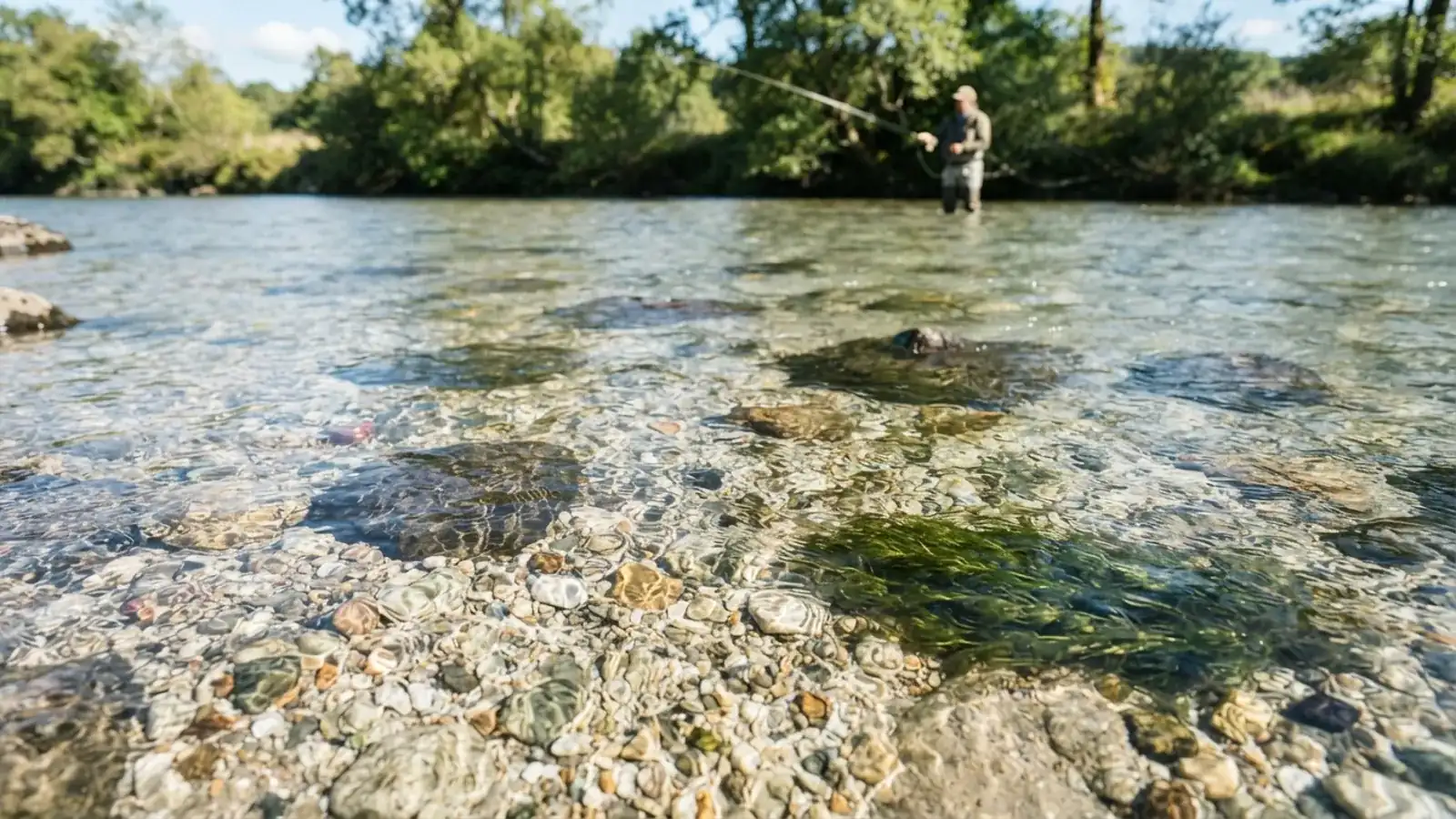
Quick answer: use a fluorocarbon leader whenever you fish clear water, pressured fish, or abrasive bottom (rocks, zebra mussels, snags). Match the leader's breaking strain to your braid — equal or slightly weaker — so the rig breaks at the leader, not mid-line. For ultralight, 0.14–0.25 mm is the working range; for pike, 0.5 mm is the minimum that reliably survives teeth. A 30–35 cm pre-tied leader with a loop on one end and a snap on the other covers most situations.
Everything below comes from the long-term, on-the-water experience of pro angler Valery Sikirzhitsky (published by Salmo), not lab specs — including the numbers that took seasons of bite-offs and break-offs to settle on.
Why fluorocarbon at all
Fluorocarbon (PVDF) was developed by Japan's Kureha Chemical Industries — first for the oil industry in the 1960s, later as fishing line. Its refractive index is close to that of water, which is why it's far less visible to fish than braid. It also shrugs off abrasion from shells and rocks, doesn't degrade in sunlight, and doesn't absorb water.
What the packaging doesn't tell you is how it behaves after abuse. In practice, fluorocarbon doesn't kink or corkscrew after snags, pike strikes, or lure tangles — unlike steel, titanium, or wire leaders, which often come back deformed. It also tangles around trebles less than braid, and when it does, you can pick it apart without damaging the line.
The known trade-off: knot strength is lower than nylon's. And fakes exist — a quick field check is the burn test. Real fluorocarbon doesn't melt into a ball; it chars into a black ember.
Where fluorocarbon belongs in a spinning setup
In spin fishing, fluorocarbon is almost exclusively a leader material (most spools are even labeled "leader material"). The one notable exception is running it as a main line on a baitcasting setup for twitching minnow-style jerkbaits.
As a leader, it earns its place in three situations: clear water, cautious fish, and abrasive bottom. If none of those apply, a straight braid connection is often fine.
Leader diameters that actually hold up
- Perch, ultralight and microjig — 0.14–0.20 mm. Slow, bottom-oriented presentations where low visibility matters most.
- Mixed ultralight (perch, chub, ide) — about 0.235 mm (≈4 kg / 9 lb). The all-round UL leader, paired with 0.1 mm braid.
- Zander over shell beds and snags — 0.25–0.35 mm. Braid gets shredded here; fluorocarbon survives.
- Pike (deliberate) — 0.50 mm minimum. Below this, bite-offs happen; jerkbait anglers go up to ~1 mm.
The matching rule: pick leader breaking strain equal to or slightly below your braid's. Example from practice: 0.1 mm braid rated 4.7 kg pairs with 0.2–0.25 mm fluorocarbon. That way, on a solid snag the rig breaks at the leader — you lose a lure, not 20 meters of braid.
Two species-specific findings worth stealing:
Chub gets fluorocarbon every time
- •Even when perch results are mixed, a fluoro leader on crankbaits for chub pays off
- •It tangles around hooks less than braid
- •And it survives being untangled
Pike don't demand it
- •Years of fishing suggest pike aren't leader-shy — metal leaders remain the default for dedicated pike fishing
- •But when conditions call for fluoro (clear water, mixed perch/zander water with pike around), 0.5 mm is the tested threshold below which teeth win
- •These same leaders also work for pike on balance lures through the ice
Fishing balance lures under the ice? The same fluorocarbon leaders carry straight over to hardwater.
Read our ice fishing guide →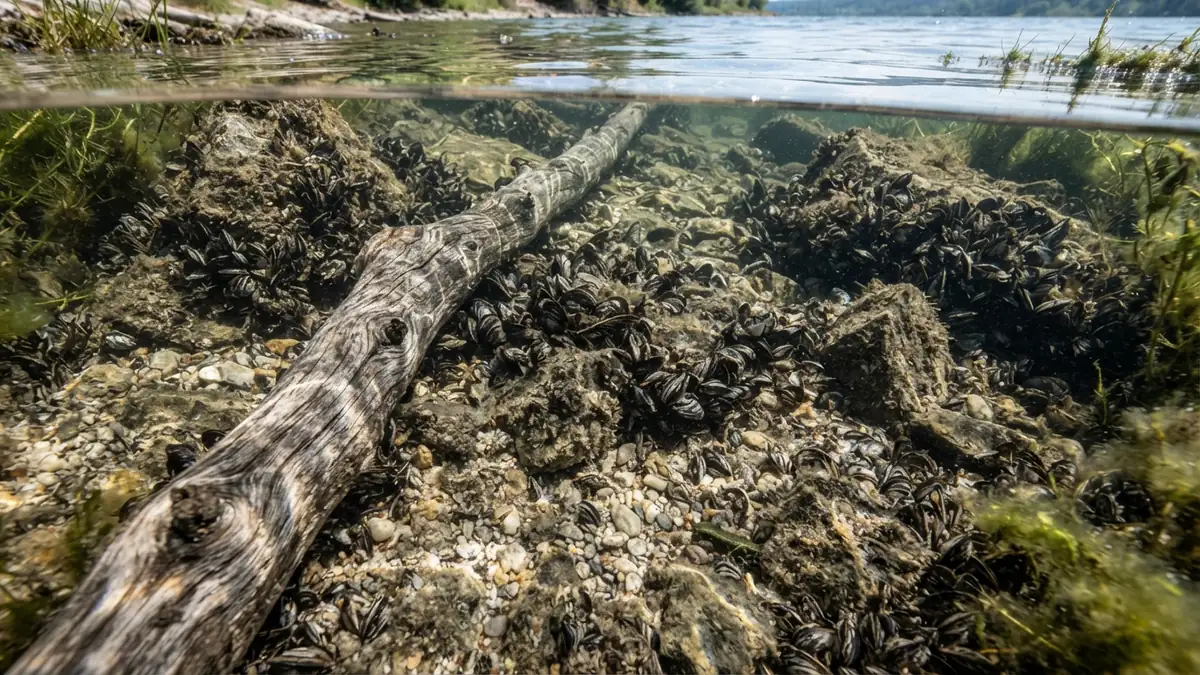
How to tie leaders you can prepare at home
Store-bought leaders run 20–35 cm and work fine. But tying your own from a spool is cheaper and lets you tune diameter to conditions.
Two field-proven builds:
- Loop-to-loop version. A small loop at each end, tied with a figure-eight knot — one loop connects to the braid, the other takes a snap. Works up to about 0.5 mm; thicker material makes the knot bulky, and crimping sleeves become the better tool.
- Snap version (the everyday choice). A snap tied directly to one end with a Palomar knot, and a figure-eight loop on the other. Faster to rig and re-rig on the water.
Keep leaders to 30–35 cm — long enough for stealth and abrasion protection, short enough that the connection knot stays outside the tip guide on the cast. If you prefer meter-long leaders, join fluoro to braid with a slim FG or "carrot" knot so it passes through the guides — but that's a knot you tie on the water, not at home.
One material tip that saves frustration: for thick pike leaders, buy soft fluorocarbon. Standard stiff fluoro above 0.4 mm fights the knot; soft versions seat cleanly even at 0.52 mm, and they straighten under the lure's weight instead of holding coil memory. Stiff material is fine with heavy lures but can deaden the action of light ones.
When to skip fluorocarbon
Stained or dark water, aggressive fish, clean soft bottom — braid straight to the snap is simpler and more sensitive. And for dedicated pike fishing, a metal leader is still cheaper insurance than any fluoro.
Leader choice matters most exactly when fish are cautious: clear water, heavy fishing pressure, bright sun. Those are also the conditions where timing matters most.
Fish the windows when cautious fish actually feed.
Check the KLEWA bite forecast →FAQ
Does a fluorocarbon leader really catch more fish?
- •In clear water and for pressured fish — yes, that's exactly the scenario it was adopted for. In murky water the difference shrinks to near zero.
What breaking strain should the leader have?
- •Equal to or slightly less than your main braid, so break-offs happen at the leader.
Can pike bite through fluorocarbon?
- •Below ~0.5 mm — regularly. At 0.5 mm bite-offs become rare; jerkbait anglers use up to 1 mm.
How long should a fluorocarbon leader be?
- •30–35 cm for pre-tied leaders. Longer only if you tie a slim braid-to-fluoro knot that clears the guides.
How do I know my fluorocarbon is genuine?
- •Burn test: real PVDF chars into a black ember instead of melting into a drip.
Practical findings in this article are drawn from the published field experience of Valery Sikirzhitsky, pro angler with Salmo (original article, in Russian).
Reviewed by the KLEWA team.